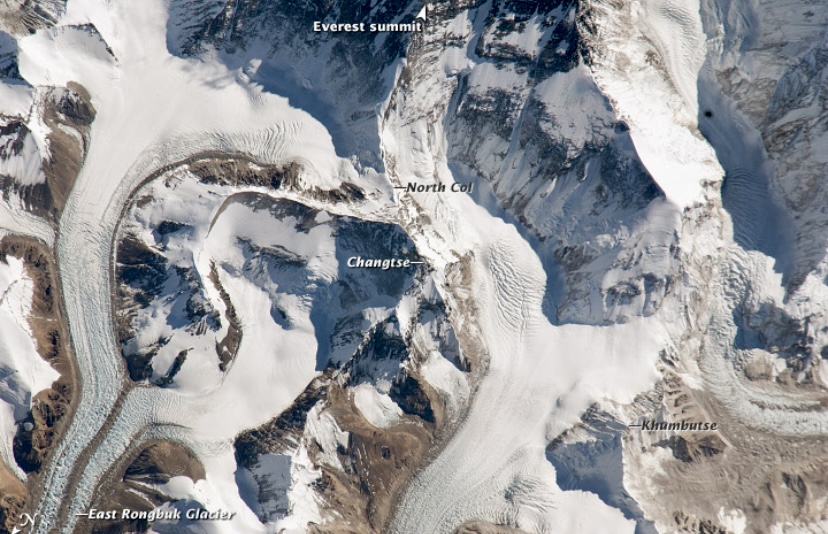
Changtse is a rarely climbed peak in Tibet in the Everest massif, flanked by the Main Rongbuk and East Rongbuk Glaciers, and linked to the world’s highest mountain by the North Col. With a prominence of only 497m, Changtse is subordinate to its parent peak.
Modern Chinese mapping lists Changtse at 7,543m, though older sources cite figures up to 7,583m. The Changtse Glacier flows north into the East Rongbuk system, and some geographic surveys note a glacial lake on the glacier near 6,216m, ranking it among the world’s highest.
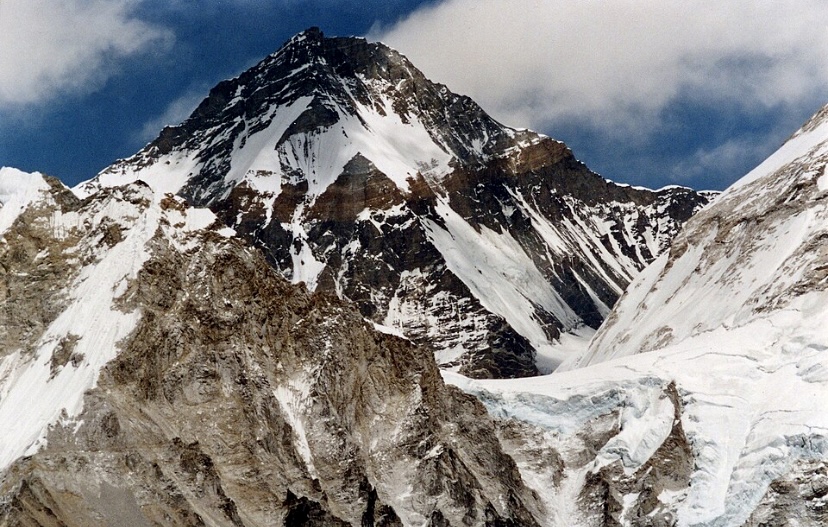
Changtse and Everest. Photo: Wikipedia
Early exploration
Because of Changtse’s connection to the classic northern approach to Everest, early mountaineering parties repeatedly crossed its flanks long before treating it as an independent objective.
In 1924, George Mallory and Andrew Irvine became the first climbers to set foot on Changtse. They climbed the East Ridge while scouting camp locations during the British Everest expedition.
The first dedicated climb
During the 1935 British Mount Everest Reconnaissance Expedition led by Eric Shipton, the team divided to scout possible climbs before targeting Changtse. Bill Tilman and Edmund Wigram considered the peak’s Northwest Ridge but deemed it impracticable and crossed north of Changtse to Camp 2.
Meanwhile, Michael Spender and Charles Warren established high-altitude survey stations, and Shipton and Dan Bryant explored the West Rongbuk Glacier. Shipton’s primary goals were to photograph Everest’s upper sections and gather data on monsoon snow behavior. Despite deteriorating weather and waist-deep snow, they established three high camps.
On August 21, 1935, Shipton, Tilman, Wigram, Bryant, and Warren launched an attempt on Changtse. They climbed to within 460m of the summit before dangerously deep, soft monsoon snow forced them back. They spent a freezing night at high camp. Then, confronted by unstable slopes and buried tents, they abandoned their summit attempt.
Moving down the East Rongbuk Glacier on August 23, the climbers reunited with Spender, who had completed his difficult survey work, and headed toward the Kharta Changri Pass.
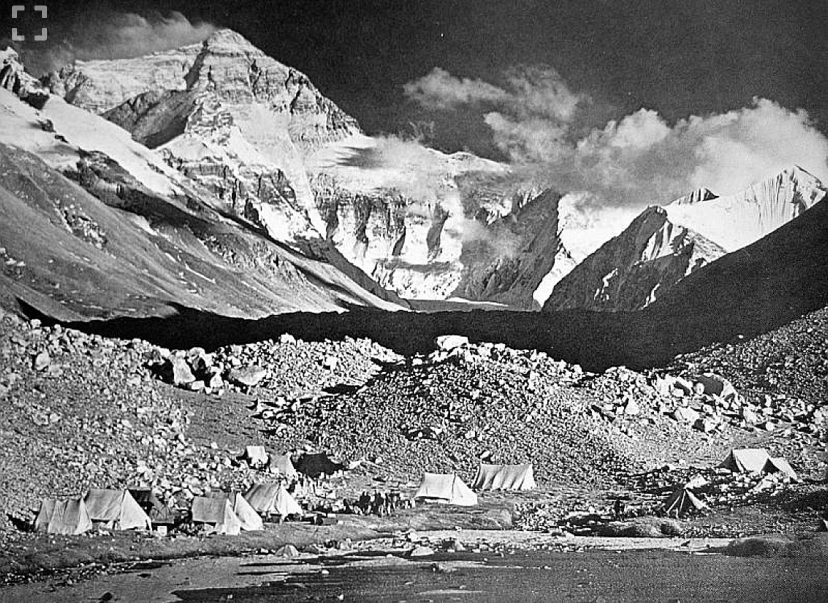
Base Camp of the 1924 Everest expedition. Photo: Royal Geographic Society
An illegal crossing
In 1952, during the British Cho Oyu Expedition, Edmund Hillary, George Lowe, and three Sherpas illegally crossed the Nup La Pass into Chinese-controlled Tibet after abandoning their Cho Oyu climb.
The group traveled to the North Side of Everest, exploring the East Rongbuk Glacier and visiting pre-war British base camp sites. Subsequently, they pushed up the Changtse Glacier for a direct attempt on Changtse’s summit. They reached 6,600m before a lack of food and supplies forced them to turn back. They returned over the pass to meet up with Shipton.
First ascent: unofficial
On October 3, 1982, Dutch climber Johan Taks, a member of the Dutch Everest expedition, climbed Changtse without a permit and against the wishes of his expedition leader. Contemporary Dutch accounts described him setting out alone after being ordered not to, returning later that day to announce success.
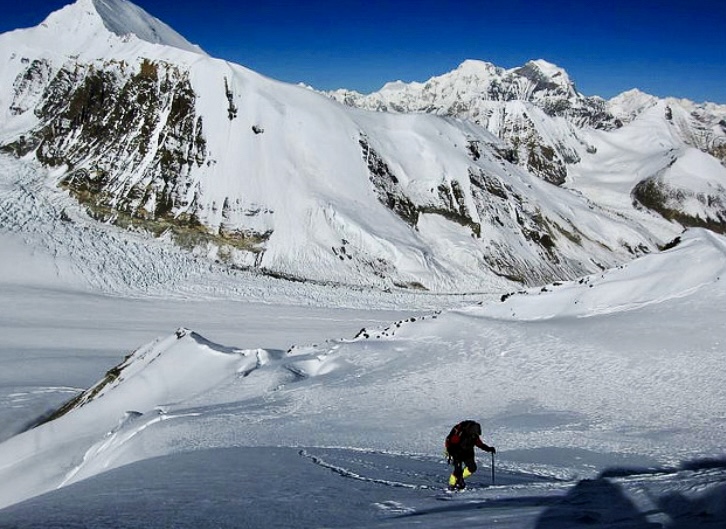
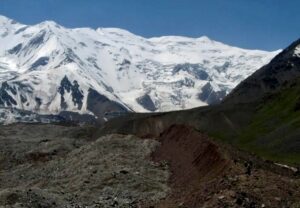
Changtse from the upper slopes of Lhakpa Ri. Photo: Himalayanwonders.com
The first permitted ascent
Eleven days after Taks’ unauthorized solo push, on October 14, 1982, the first official ascent of Changtse was achieved by members of a German party.
The German Alpine Club team, co-led by Eduard Geyer and Hansjuergen Tauscher, approached the mountain via the East Rongbuk route. The expedition included climbers Paul Braun, Thomas Dunsser, Martin Engler, Walter Ernst, Rudolf Frick, Andreas Heckmair Jr., Ludwig Hoesle, Peter Lechart, Udo Zehetleitner, and Wilfried Zink.
The team drove from Lhasa and established their Base Camp near the final moraine of the Rongbuk Glacier at 5,105m. From there, they pushed up Everest and Changtse without the help of high-altitude porters. The climbers relied on their own strength and a team of six yaks to establish Camp 1 at 5,601m on October 2, followed two days later by Camp 2 at 6,096m, at the foot of Changtse’s long northeast ridge.
To get higher, the climbers first had to climb a difficult 610m snow-and-ice slope mixed with exposed rock. They established Camp 3 at 6,400m, sheltered behind a protective rock spur. Above this point, they fixed ropes along a steep slope on a wide ridge that curved first north and then sloped east. On October 13, they successfully placed Camp 4 high on the ridge at 6,903m.
Summit
On October 14, Zehetleitner completed the first official ascent, climbing via the four-kilometer northeast ridge, starting from the junction of the East Rongbuk and Changtse Glaciers. Two days later, on October 16, Braun, Frick, Hoesle, and Engler also topped out. They listed Changtse’s height as 7,550m.
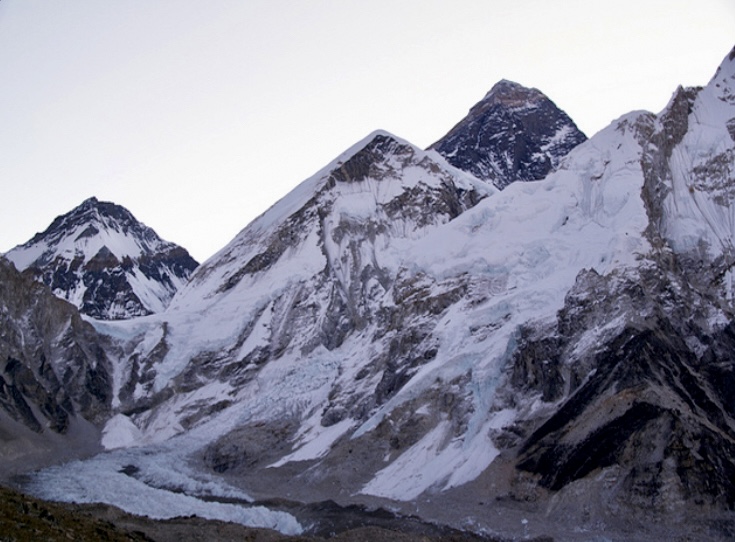
Everest and Changtse. Photo: Himalayanwonders.com
Another unofficial solo climb
In May 1983, the first Chilean expedition to Everest was already stretched thin by high altitude and extreme logistics when internal friction pushed the team over the edge. Among the climbers was 25-year-old glaciologist Gino Casassa, who had been temporarily sidelined by altitude sickness and was sent down to Base Camp to recover.
As his health improved, Casassa grew restless under the strict commands of his expedition leader, Gaston Oyarzun. Forbidden from taking unnecessary risks, Casassa instead fixed his sights on Changtse. At 3:30 am on May 14, Casassa secretly slipped out of camp alone, starting an unauthorized solo attempt up the mountain’s long northeast ridge — the same route used by the Germans.
Moving rapidly in the subzero darkness without a permit, radio communication, or backup, he gambled everything on a lightweight style. By 3:30 pm, he was just 10m below the summit. However, the upper sections of the ridge deteriorated into unstable snow cornices and deep powder. Casassa narrowly escaped disaster when the snowpack fractured and slumped 4.5m beneath his boots, threatening to trigger a massive avalanche down the face.
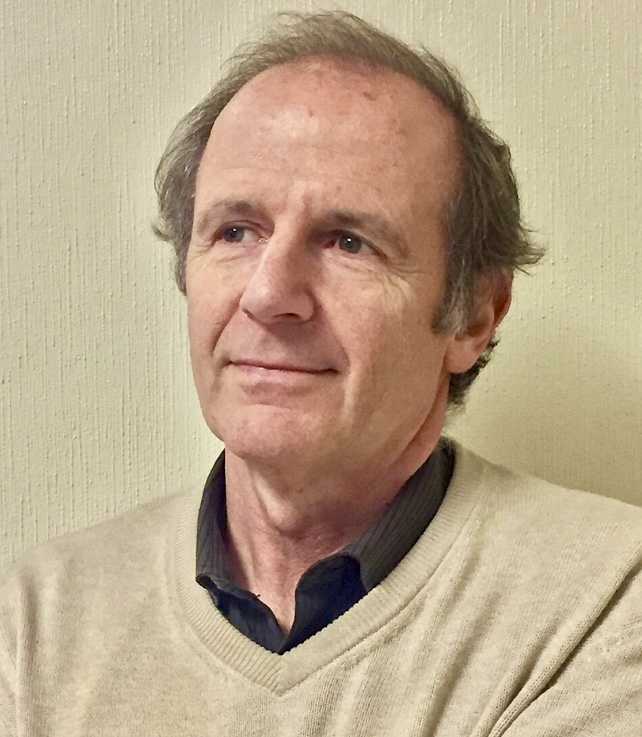
Gino Casassa. Photo: Wikipedia
Casassa pushes on
Refusing to retreat, Casassa bypassed the unstable ridge by traversing directly onto the steep, exposed north face. He finally reached the summit at 5:00 pm. After a difficult descent in the dark, he reached Camp 2 at 11:00 pm, exhausted and dehydrated.
Back at camp, his unexpected return sparked outrage rather than celebration. While Casassa was on the peak, his teammates were managing a high-altitude medical emergency, and his unauthorized disappearance had caused immense panic.
Because the climb lacked official Chinese permits, it also carried diplomatic risks for future Chilean expeditions. The Chilean Mountaineering Federation officially expelled Casassa, concluding one of the era’s most astonishing solo feats with immediate controversy.
First woman to summit
In May 1986, a massive Chinese–Japanese expedition (17 Japanese and 19 Chinese climbers) targeted the mountain. After establishing an Advance Base at the confluence of the Changtse and East Rongbuk Glaciers, they pushed up the Changtse Glacier and the northeast ridge.
On May 10, 16 climbers reached the summit. Among them was Tibetan climber Gunsang (also spelled Guisang), who became the first woman to summit Changtse. A second wave of eight Chinese climbers topped out the following day, while the remaining Japanese climbers withdrew to assist a teammate suffering from high-altitude sickness. According to the Himalayan Database, Gunsang remains the only woman to summit.
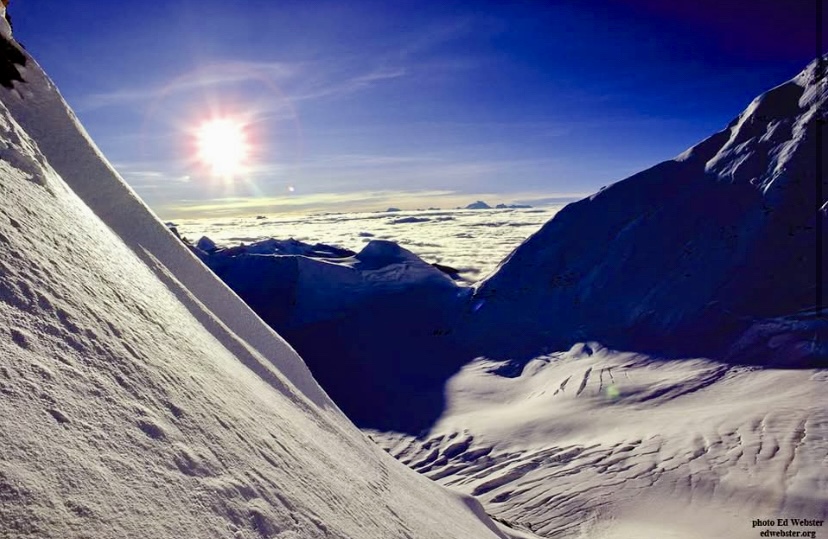
Ed Webster’s photo on August 26, 1986, during his first attempt on Changtse’s Northeast Ridge. Two days later, he established a new route, solo via the Southeast Face. Photo: Ed Webster
Solo climb of the southeast face
Later that same summer, American mountaineer Ed Webster arrived to attempt a bold, lightweight climb.
On August 26, 1986, he initially turned back from 7,163m on the right side of the face because of dangerously thin snow over brittle shale. After just a single rest day, he launched another attempt on August 28 and established a landmark new route up the southeast face.
Starting from an Advance Base at 6,126m near the foot of the North Col, Webster climbed the lower, highly avalanche-prone sections in total darkness to capitalize on the stable nighttime freeze. He navigated a prominent snow gully between two massive rock buttresses, traversed the upper face, and connected with the German northeast ridge route to reach the summit alone in a 15-hour round trip.
Other notable climbs
In September 1987, an Australian expedition led by Robert Turner arrived at the East Rongbuk side of the mountain. On September 29, despite punishing high-altitude winds and deteriorating conditions, Turner and Glen Nash reached the summit. They climbed via a central couloir to the left of the north face icefall. This completed a line that was closely related to a route scouted by a Japanese team the previous year.
Changtse attracted global attention in late summer 2016 because of two remarkable solo ascents. Jordi Tosas of Spain reached the summit via the east ridge on August 27, and Kilian Jornet followed on September 11, via a variant line up the northeast face.
The total number of Changtse summits remains low, at around 60. The standard line remains the northeast ridge.
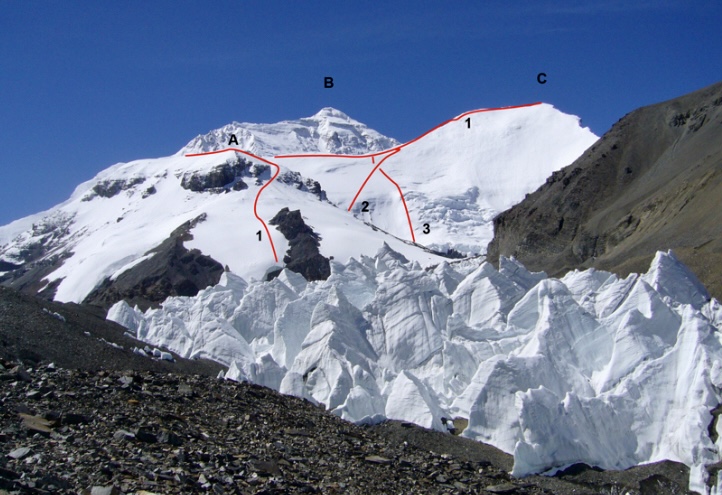
Illustrated photo of the 2016 expedition for the American Alpine Journal. From the approach to the north: (A) Point 6,822m; (B) Everest; and (C) Changtse. (1) Approach to the east ridge of Changtse (first ascent 1982). (2) Jornet variant on the north face (2016). (3) Japanese variant on the north face (1986). Photo: Jordi Tosas