In a mountain emergency, sometimes there’s no one on the other end of the rope. There is no helicopter and no nearby rescue team. It’s just you. In those moments, survival becomes about willpower and luck, as we saw recently with Hillary Dawa Sherpa, who was abandoned on Everest.
Today, we revisit several epic self-rescues in mountaineering in which climbers became their own rescue teams, dragging their shattered bodies through hell to safety.
A zombie on Minya Konka
One epic self-rescue occurred in 1982, in Sichuan, China. That April, Japanese alpinists Hironari Matsuda and Makoto Sugawara were high on the northeast ridge of 7,556m Minya Konka (Gongga Shan). They were part of a seven-man expedition, but on April 28, only the two of them reached Camp 5 at 6,800m.
The next day, they bivouacked just 50m below the summit, but they were already exhausted, out of food and water, and badly dehydrated. On April 30, in deteriorating weather, Matsuda and Sugawara made the tough decision to turn back.
During the descent, they became badly disoriented, losing the route down every few minutes. In their last radio call, they reported the problems before the battery died. The rest of the team, unable to climb the fixed ropes effectively for a rescue, assumed both climbers had perished. They left a memorial message at Camp 2 (“We will never forget you, Matsuda and Sugawara”) and evacuated Base Camp on May 9, leaving some food behind at lower camps.
Matsuda and Sugawara continued their desperate descent, constantly lost, weak from dehydration and fatigue, with frostbite setting in. They lost their gloves and ice axes. Matsuda lost one boot and replaced it with his leather camera case. After about a week, they reached Camp 1. There, Sugawara told Matsuda he needed to rest. Matsuda never saw him again.
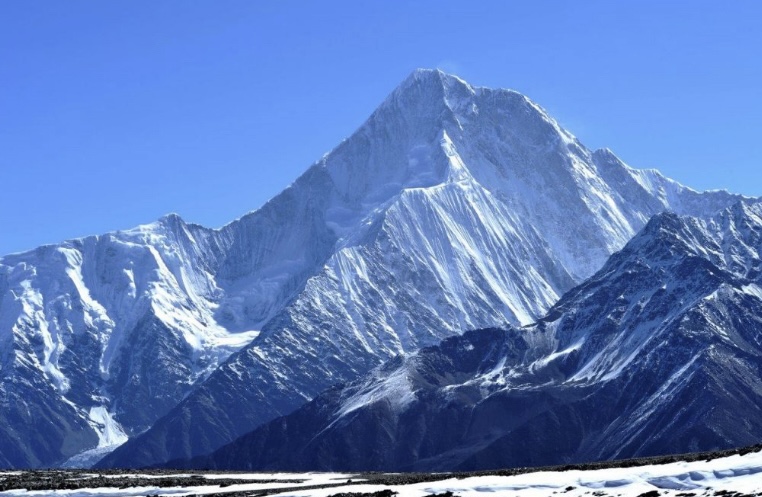
Minya Konka from the southeast. Photo: Sebastian Alvaro
Ulcers and survival
Alone, with frozen hands and feet, Matsuda rappelled down sections “like a zombie.” He reached Advanced Base Camp, which was empty but had some leftover food, although stomach ulcers prevented him from eating much of it. He kept going lower and finally reached the site of base camp at around 2,900m on May 21, roughly three weeks after the last radio contact.
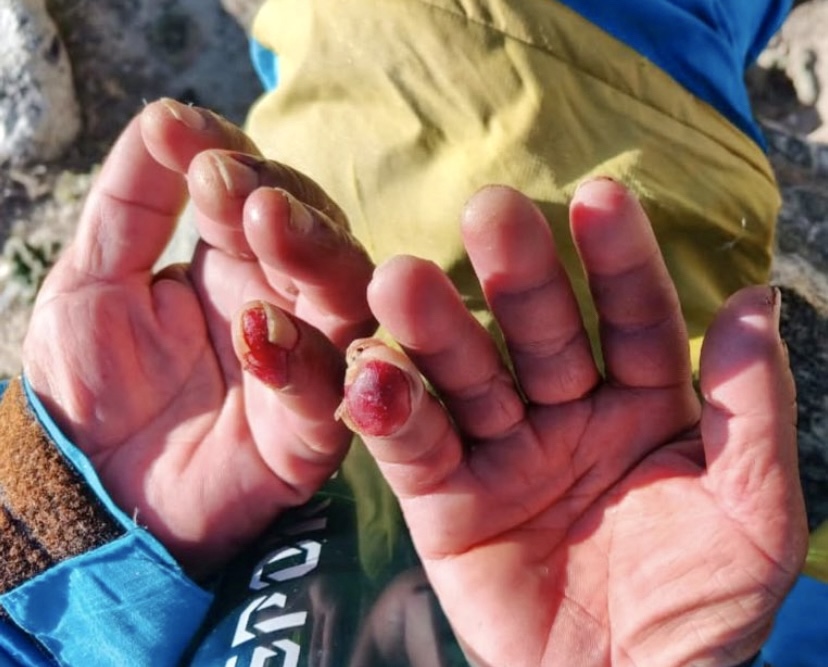
There, local herb gatherers found him a few hours later. They initially mistook him for a corpse, but he was still breathing. He was strapped to a horse for the agonizing ride to the hospital. He weighed less than 40kg. Doctors had to amputate both of his frozen feet above the ankles and all 10 of his fingers. His partner Sugawara’s body was never recovered.
Siula Grande
This is one of the most famous of all self-rescues, chronicled in the classic book and film Touching the Void. In 1985, after the first ascent of the highly technical west face of 6,344m Siula Grande, British climber Joe Simpson fell from an ice cliff and shattered his right leg while descending. The impact drove his tibia up through his knee joint, crushing it.
His partner, Simon Yates, spent hours courageously lowering him down steep ice in a storm. At one point, Yates unknowingly lowered Simpson over a hidden cliff edge, leaving him dangling in the darkness above a crevasse.
Unable to hear each other in the screaming wind and slipping from his own snowy anchor, Yates made the agonizing decision to cut the rope, a controversial choice that Simpson later fiercely defended as the only way either of them could survive. Simpson plunged into the freezing dark, landing on a fragile snow bridge inside the crevasse. Yates saved himself by descending alone, thinking his partner had died.
But against all odds, Simpson survived the fall. When daylight came, he realized that nobody was coming back for him. Instead of giving up, he chose to lower himself even deeper into the icy abyss, discovering a small exit hole at the bottom.
For the next three to four days, Simpson crawled, hopped, and slid across kilometers of unstable moraine with no food and almost no water. He reached base camp completely delirious, just as Yates was packing up to leave. His story became a legendary testament to human resilience.
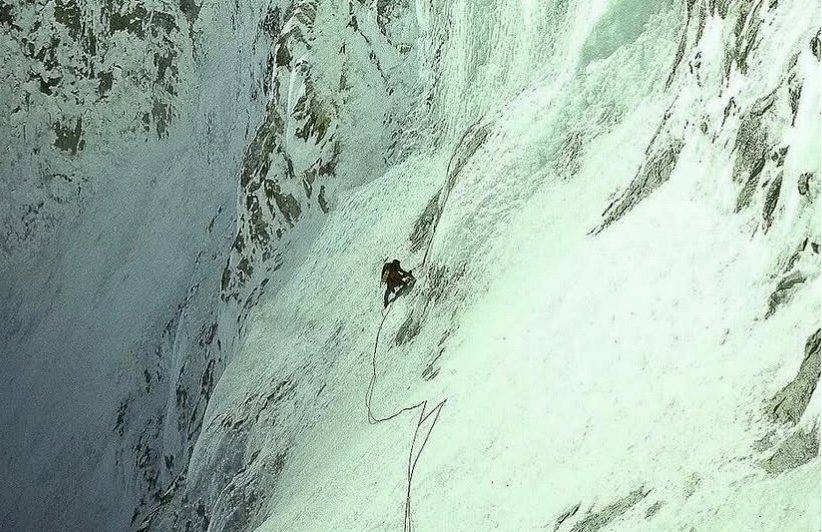
The 1985 Siula Grande expedition. Photo: Joe Simpson/Simon Yates
Self-amputated his arm
In another famous survival tale, Aron Ralston headed alone into Utah’s remote Bluejohn Canyon in April 2003. He told no one where he was going. While navigating a narrow slot canyon, a shifting boulder slipped, pinning his right hand and forearm against the sandstone wall. For over five days, Ralston rationed a tiny amount of water and tried every mechanical trick in his arsenal to move the rock, without success.
On the morning of the sixth day, severely dehydrated and experiencing hallucinations, Ralston realized he would die in the canyon unless he took drastic action. Using the leverage of his own body weight, he deliberately snapped the radius and ulna bones in his arm. He then used a remarkably dull multi-tool knife to slice through his own muscle, skin, and nerves, completing a brutal self-amputation.
Making a tourniquet and bandaging his stump, he rigged a one-handed anchor, rappelled down a 20m cliff, and began an 11km hike across the desert before crossing paths with a family of hikers who raised the alarm.
He later detailed this agonizing self-rescue in his bestselling book, Between a Rock and a Hard Place, which was later adapted into the Oscar-nominated film 127 Hours.
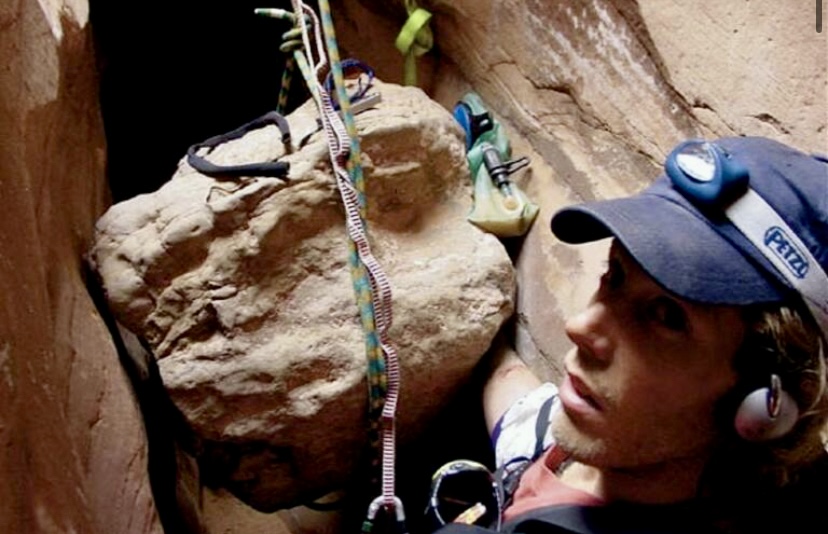
Aron Ralston trapped. Photo: Aron Ralston
Boulder smashed his leg
In July 2014, American Gregg Hein was climbing solo on 4,135m Mount Goddard, in California’s Kings Canyon National Park. While descending, he accidentally dislodged a 70kg boulder, which rolled over his leg, crushing it. Stranded alone at high elevation, Hein fashioned a makeshift splint from his trekking poles, belt, and clothing. He sheltered in his bivy sack, melted snow for water, and kept himself alive by eating crickets, moths, ants, and whatever other insects he could catch.
After several days, he made the tough decision to leave most of his food and pack behind to lighten his load, then crawled roughly 2.6km toward a lake for better visibility and water. On the sixth day, search helicopters (which were looking for him because he had given his father his itinerary and expected return date) spotted Hein waving his yellow bivy sack. He was airlifted to safety and later underwent multiple surgeries.
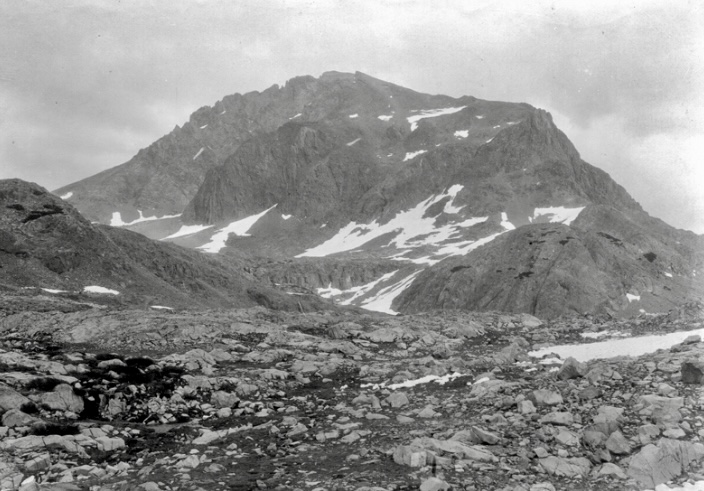
Mount Goddard from the south. Photo: Gilbert, G.K./Wikimedia
Lafaille on Annapurna I
In the autumn of 1992, Frenchmen Jean-Christophe Lafaille and Pierre Beghin were high on the monstrous South Face of Annapurna I at about 7,400m when tragedy struck. During an alpine-style retreat in bad weather, a precarious rappel anchor blew out, sending Beghin plunging to his death. He took the pair’s main gear and hardware with him into the abyss. Lafaille was left entirely alone in the death zone, stranded on a vertical wall with almost no equipment. To make matters worse, a falling rock soon smashed his right arm, breaking his bone and rendering the arm useless.
He managed to reach their last bivouac site and found a 20m length of rope, which allowed him to make short rappels on the hardest sections. Over the next five days, Lafaille downclimbed more than 1,000 vertical meters of technical rock and blue ice. He improvised rappels using tiny bits of leftover cord, tent poles, and even plastic water bottles jammed into cracks. Moving deliberately and using only one arm for stability, he finally engineered one of the most brilliant, technically flawless solo escapes in history.
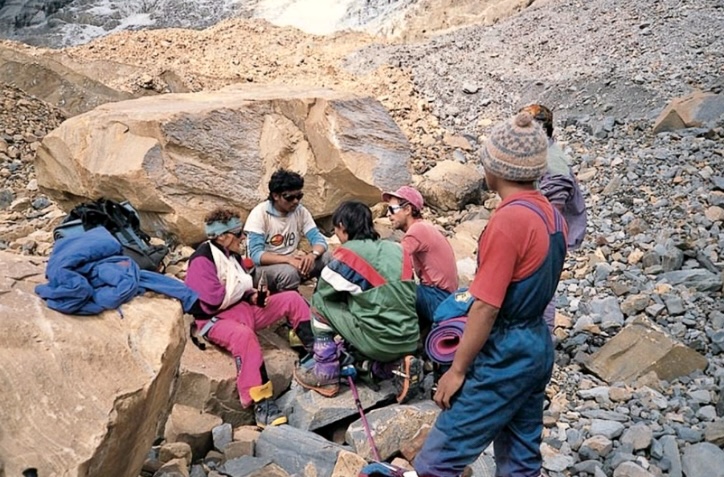
Jean-Christophe Lafaille after descending from Annapurna I. Photo: Jean-Christophe Lafaille via Desnivel
Sole survivor
In June 1992 in Alaska, American guide Colby Coombs and his two partners were ascending a new direct finish on the East Face of 5,304m Mount Foraker (known as the Pink Panther route) when a massive slab avalanche swept the roped trio 240m down the face. When Coombs regained consciousness hours later, he was hanging from the rope on a buttress. His two friends, Ritt Kellogg and Tom Walter, had perished in the fall. Coombs was in terrible shape. He had a fractured shoulder blade, a broken ankle, two fractured cervical vertebrae in his neck, and a severe concussion.
Instead of waiting to die, he began a painful six-day solo descent. Navigating crevasses, ice walls, and steep slopes while enduring terrible spinal pain, he finally dragged himself back to the base camp area on the Kahiltna Glacier, where a search plane eventually spotted him, and he was evacuated.
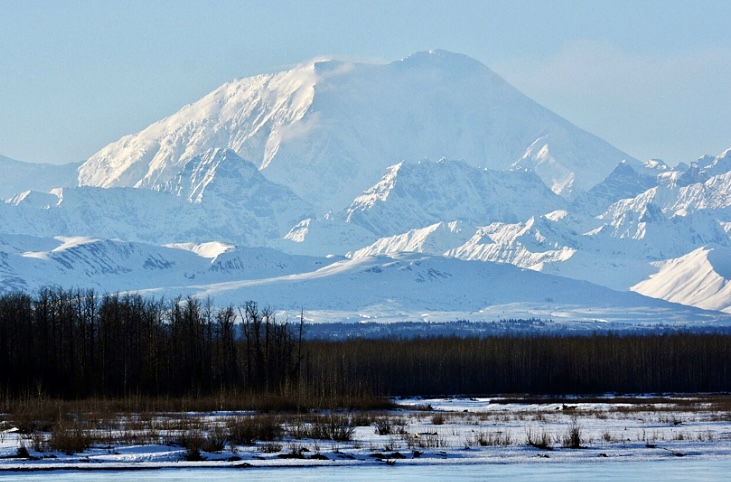
Mount Foraker. Photo: Paxson Woelber/Wikimedia
A difficult descent from Gasherbrum IV
In the summer of 2023, Russian Sergey Nilov and his longtime climbing partner Dmitry Golovchenko were attempting a new technical route on the Southeast Ridge of 7,925m Gasherbrum IV. Two of the most accomplished climbers in recent history, they were high on the mountain and had just put up their tent for the night. As it was not correctly fixed, Nilov stepped out to improve the platform when the tent slid with Golovchenko inside. Golovchenko fell over the edge to his death.
Nilov was left alone on a knife-edge ridge with almost no gear or shelter. The duo’s original plan had been to traverse the summit and descend via a known route, but that was no longer possible. After Golovchenko’s fatal fall, Nilov had no other chance to survive than to descend by the same route they had come up.
He managed to go down where Golovchenko’s body was. He wrapped the body in the tent and placed it in a crevasse on the glacier plateau. Over the next five days, Nilov downclimbed the difficult technical ridge without a tent, battling severe wind and cold, and already suffering from frostbite. He eventually reached Base Camp alive.
While Nilov miraculously survived this 2023 tragedy, he sadly lost his life on the same mountain in August 2024 when a serac collapsed during a return expedition to recover Golovchenko’s remains.
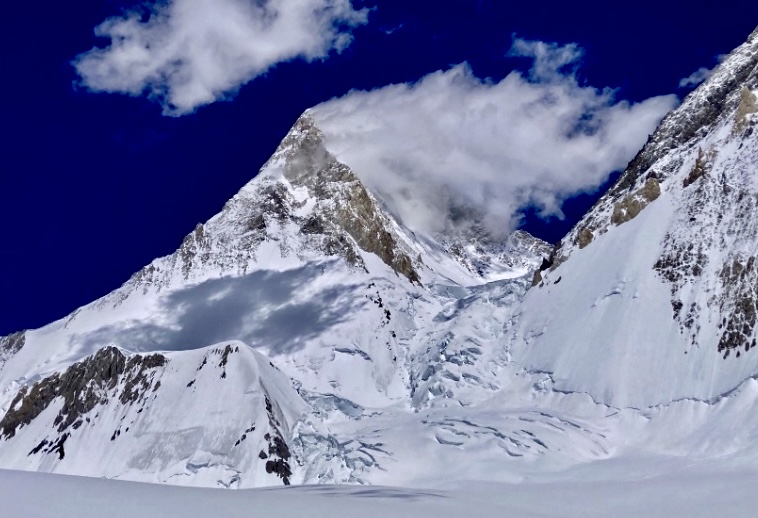
Gasherbrum IV. Photo: Dmitry Golovchenko
Crevasse escape
In May 2014, American scientist John All was conducting climate research alone on 7,126m Himlung in Nepal when he stepped onto a fragile snow bridge and fell 21m into a crevasse, landing on a small ice ledge. The fall broke 15 bones, including his arm and several ribs, dislocated his right shoulder, and caused internal bleeding.
Realizing that no one knew exactly where he was, All recorded a video, below, documenting his predicament. Using a single ice axe with his left arm, crampons, and the chimneying technique between the walls, he spent five painful hours working his way up the overhanging ice. He finally crawled out onto the glacier and back to his tent. From there, he used his satellite messenger to send an urgent plea for help. He was rescued by helicopter the next day.
He later detailed the harrowing ordeal in his book Icefall: Adventures at the Wild Edges of Our Dangerous, Changing Planet.
Avalanche on winter Broad Peak
In 2020, during a bold, solo winter attempt on 8,051m Broad Peak, an avalanche struck renowned climber Denis Urubko. It dragged him 100m down the mountain before snapping his fixed safety rope, causing him to fall another 50m through the air. He came to a stop just 50m before a massive, deadly crevasse drop-off.
Though bruised and suffering from the physical shock of the slide, Urubko knew he was in extreme danger from the dropping temperatures. He collected his gear, stood up, and fought his way down through hurricane-force winter winds. Navigating icy slopes alone in the dark, his extreme high-altitude fitness allowed him to reach Base Camp safely.
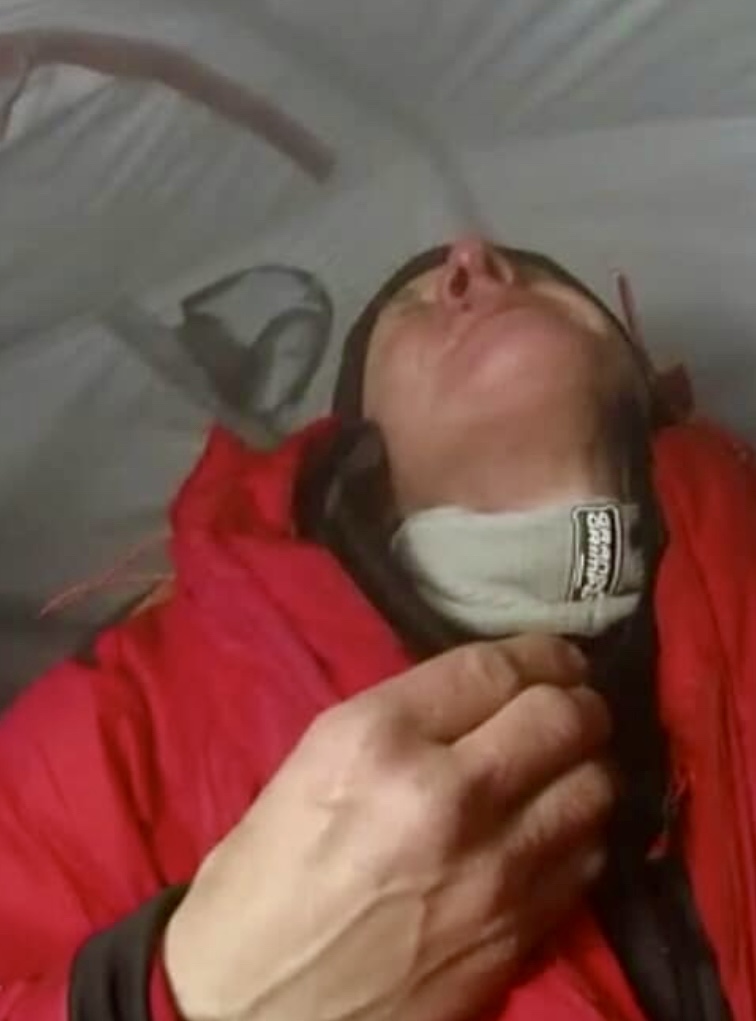
Denis Urubko was in pain after being swept down Broad Peak, but he kept going. Photo: Denis Urubko
Ascended as a cook, descended as a legend
One of the most astonishing survival stories in recent history took place in June 2026. On May 29, 2026, Nepalese Hillary Dawa Sherpa was descending from Everest while retreating from the summit push with a client. Dawa originally was hired as a Camp 2 cook, but he ended up as a substitute climbing guide. Suffering exhaustion and altitude sickness, Dawa became separated from his team at about 7,500m. In the frantic rush of the final days of the climbing season, he was left behind.
As days passed with no sign of him, his family in Kathmandu was heartbroken, and formal funeral preparations were even set in motion. But Dawa was not dead. He survived six days entirely alone, with nothing but a few chocolates, and without supplementary oxygen.
Even after the Icefall Doctors had partially dismantled the route’s ladders across the deep crevasses, Dawa started to cross the fractured Khumbu Icefall. Once, he fell into a crevasse and spent two and a half days trapped inside. He ate nothing for the first two days, then survived on the chocolates in his pocket and by chewing ice. Remarkably, a small avalanche filled the crevasse enough for him to scramble out.
In a display of pure survival drive, he slowly dragged himself down the mountain. On June 4, one day after a rescue helicopter couldn’t spot him, a cleanup crew near Base Camp spotted a figure crawling across the lower glacier. It was Dawa, frostbitten but alive, executing a historic, solo descent.
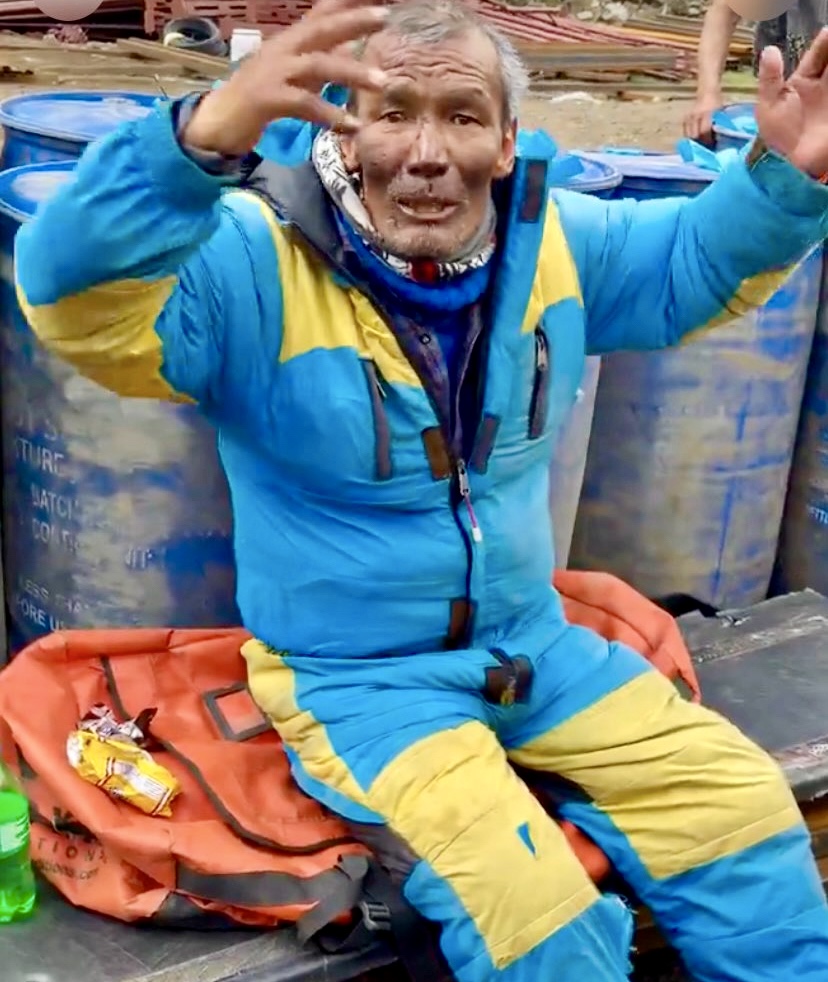
Hillary Dawa Sherpa, right after his incredible solo descent from Everest. Frame of a video/Mingmar Sherpa